When Trust Becomes a Business Model: Inside America's Open-Door Main Streets

Photo: Photograph by Mike Peel (www.mikepeel.net)., CC BY-SA 4.0, via Wikimedia Commons
On a Tuesday evening in Dayton, Ohio, the lights at Mabel & Sons Coffee House burn well past the hour when most cafés have long since gone dark. The door stays unlocked until 10 p.m. A chalkboard by the register reads: "Pay what you can. No questions asked."
Owner Denise Alvarado started the extended-hours experiment eighteen months ago, partly out of necessity — she needed the revenue — and partly out of conviction. "I figured if I treated the neighborhood like it belonged here, it would act like it belonged here," she says. Her register receipts suggest she was right. Evening sales now account for nearly a third of her monthly revenue, and her shop has become an informal meeting hall for a church group, a fledgling tutoring nonprofit, and two book clubs.
Alvarado is not an outlier. From Portland, Maine, to Boise, Idaho, a quiet cohort of shop owners, café operators, and even a handful of public libraries is embracing what some economists have begun calling the open-door economy: a business posture built on extended access, radical transparency, and trust extended first, before it is earned.
What the Open-Door Economy Actually Looks Like
The practices vary, but they share a common thread — lowering the barriers between a business and its community. Common features include:
- Extended or unusual hours, particularly in neighborhoods where traditional 9-to-5 retail leaves evening and overnight workers underserved.
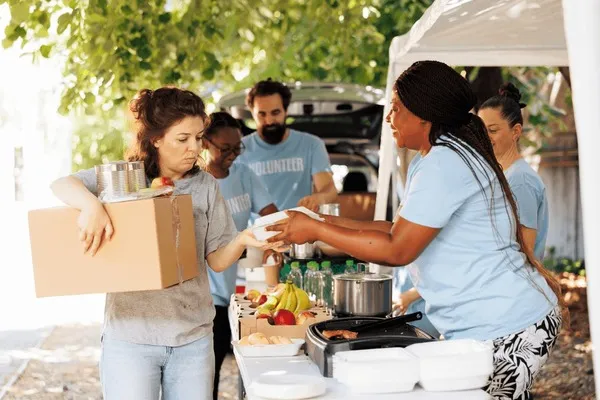
- Pay-what-you-can windows, where a suggested price exists but no one is turned away.
- Community bulletin boards and lending shelves, converting spare wall space into neighborhood infrastructure.
- Open-invitation events, from repair cafés to English conversation hours, hosted in retail space after normal business hours.
Three Owners, Three Experiments
In Greensboro, North Carolina, hardware store owner Marcus Bell installed a community bulletin board in his front window after noticing customers lingering to chat. Within a year, the board had spawned a neighborhood tool-lending list, and Bell estimates it drives a dozen new customers a week. "People come in to post a flyer and leave with a hammer," he laughs. "It's the cheapest marketing I've ever done."
Two time zones away in Yakima, Washington, grocer Elena Ruiz launched a pay-what-you-can produce bin stocked with surplus inventory that would otherwise be discarded. Roughly 60 percent of shoppers pay the suggested price; some pay more, covering those who pay less. Ruiz tracked the program carefully and found waste down 22 percent while overall store traffic rose. "The bin doesn't make money," she notes. "The store makes money because the bin brings people through the door."
And in a strip mall outside Des Moines, the public library branch tested Sunday-evening open hours staffed largely by volunteers. Average Sunday visits tripled over six months, with the largest gains among teenagers and shift workers — groups that traditional daytime hours had effectively locked out.
What the Foot Traffic Data Reveals
The pattern across these cases is consistent: openness generates traffic, and traffic generates trust, which in turn generates commerce. Businesses that adopted at least two open-door practices reported, in aggregate, higher repeat-visit rates than comparable shops in their areas. More striking is the second-order effect — open-door businesses frequently become anchors for surrounding retailers, extending customer dwell time across an entire block.
Skeptics raise fair concerns: shrinkage, safety, staffing costs. Ruiz's answer is pragmatic. "Start small. Measure everything. You'll find most of your fears are bigger on paper than on the sidewalk."
A Checklist for Businesses Considering the Shift
- Pick one practice, not five. Extended hours, a bulletin board, or a pay-what-you-can item — begin with a single test.
- Set a measurement window. Ninety days minimum, with weekly foot traffic counts.
- Define your floor. For sliding-scale pricing, know your cost so generosity stays sustainable.
- Tell the neighborhood. An open door nobody notices is just a door.
- Partner locally. Libraries, churches, and schools can extend your reach at little cost.
- Review honestly. If the data says stop, stop. If it says expand, expand.
The open-door economy is not a slogan; it is a wager that communities reward the businesses that trust them first. In town after town, the wager is paying off.