From 'For Lease' to 'Everyone Welcome': The Quiet Revival of America's Empty Storefronts
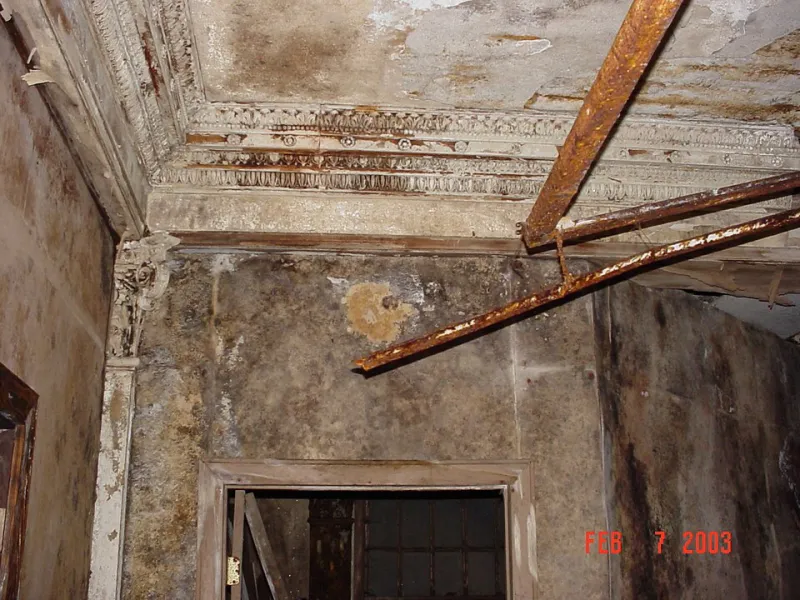
Photo: Ohio Redevelopment Projects - ODSA, CC BY 2.0, via Wikimedia Commons
On a Tuesday morning in Dayton, Ohio, a building that sat empty for nearly four years hums with activity. A retired machinist shows a teenager how to use a laser cutter. In the back room, a small business incubator runs a workshop on bookkeeping. Outside, the windows that once displayed a faded 'For Lease' sign now hold hand-painted letters: Welcome in.
Scenes like this are playing out in communities across the country, where the pandemic-era wave of retail closures left behind a stubborn inventory of empty storefronts — and where residents, nonprofit organizers, and forward-thinking city officials have begun treating that vacancy not as a blight, but as raw material.
The Scale of the Vacancy Problem
Commercial vacancy in the United States remains elevated well above pre-2020 levels, with some estimates placing national retail vacancy above 10 percent. The consequences compound quickly: an empty anchor store reduces foot traffic, which weakens neighboring businesses, which depresses property values and erodes a community's tax base. Municipal researchers have long documented how a single abandoned storefront can drag down an entire block.
But a growing number of towns have decided that the fastest route back is not another chain tenant. It is handing the keys to the community itself.
Libraries, Co-ops, and Makerspaces: The New Tenants
In Poughkeepsie, New York, a shuttered bank branch became a satellite branch of the public library, complete with a children's reading room where the vault once stood. In rural Kansas, a vacant hardware store now houses a food cooperative owned by more than 300 local member-owners. And in a former dress shop in a mid-sized city in the Carolinas, a nonprofit makerspace offers free equipment access to residents who could never afford a workshop of their own.
The organizers behind these projects describe a common experience: the moment the door first opened, people streamed in simply because it had been so long since anything on that block had welcomed them.
"People told us they used to walk past that building and cross the street," one cooperative organizer recalled. "Now they walk past and come inside. That's the whole difference."
The Policies Behind the Open Doors
None of this happens by accident. The most successful conversions share a policy foundation:
- Property tax abatements for adaptive reuse. Several states and municipalities offer reduced assessments for owners who convert commercial space to civic or cooperative use, lowering the carrying cost during renovation.
- Land banks and side-lot programs. Originally designed for residential blight, land banks in Michigan, Ohio, and Pennsylvania have increasingly acquired commercial properties and transferred them to nonprofits at nominal cost.
- Vacant property registries with escalating fees. Cities including Wilmington, Delaware, and Cheltenham, Pennsylvania, charge owners progressively higher fees the longer a building sits empty — creating a financial incentive to lease or sell to community buyers.
- Pop-up leasing ordinances. Simplified permitting for temporary uses lets a library pop-up or community dinner test demand in a space before a permanent commitment is made.
- Facade and tenant-improvement grants. Modest matching grants — often under $25,000 — have proven decisive in helping small nonprofits and co-ops cover the build-out costs that conventional financing rarely touches.
What Organizers Wish They Had Known
Conversations with organizers surface recurring lessons. First, relationships with the property owner matter more than the lease terms; many conversions began with a handshake and a below-market rent agreement born of an owner's frustration with vacancy. Second, insurance and code compliance are the hidden hurdles — buildings that sat empty often need electrical, accessibility, and fire-safety upgrades before a certificate of occupancy will be issued, and budgets should assume it. Third, programming beats renovation: a modestly finished space with a full calendar of events outperforms a beautifully restored one that sits quiet.
A Replicable Model
The encouraging news is that this is not a phenomenon reserved for cities with large foundations or wealthy downtown associations. The Kansas co-op launched with a rural development loan and volunteer labor. The Dayton makerspace began with donated equipment and a one-year lease.
The common thread is a simple reframe: a vacant storefront is not a wound in a streetscape. It is an open question. And in a growing number of American communities, the answer being written on those once-dark windows is straightforward — come in, we've been expecting you.