Five Doors You Can Open Right Where You Live
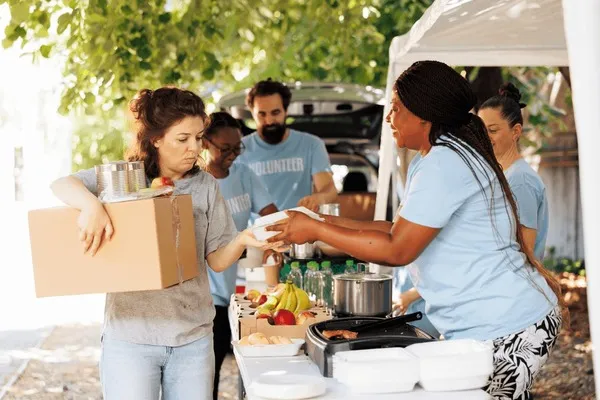
Photo: diverse neighbors volunteering together community dinner serving food warm friendly, via www.shutterstock.com
Every community runs on people who simply decide to help. Not professionals, not politicians — neighbors. If you have been meaning to get more involved but weren't sure where to begin, consider this your starting point. Below are five ways to make a measurable difference within a few miles of your front door, along with the first steps to take this week.
1. Welcome Newly Arrived Immigrant Families
Refugees and immigrants rebuilding their lives in the United States often arrive with resilience and little else — no car, no local contacts, no familiarity with the school system or the grocery store. Volunteer welcome teams help with everything from airport greetings to apartment setup, English conversation practice, and navigating public transit.
First step: Visit the websites of the International Rescue Committee (rescue.org), Church World Service, or HIAS, all of which maintain volunteer sign-up portals and offer structured onboarding. Most require a background check and a two-hour orientation. Co-sponsorship programs in particular need teams of four to eight people who can commit a few hours a month.
2. Tutor an Adult Learning to Read
Roughly one in five American adults reads at or below a third-grade level, according to the National Center for Education Statistics. That affects job applications, prescription labels, school forms, and daily confidence in ways most of us never consider. Adult literacy tutoring requires patience more than credentials — if you can read, you can teach someone to read better.
First step: Contact ProLiteracy (proliteracy.org) to find a local affiliate program, or search for your county's adult education office. Training is typically free, sessions run one to two hours weekly, and many programs now offer virtual options if transportation is a barrier.
3. Host or Help With a Community Dinner
Shared meals remain the most underrated tool in community building. Neighborhood potlucks, church basement suppers, and free community dinners reduce isolation for seniors, newcomers, and families stretched thin — and they cost little to organize.
First step: Check whether your neighborhood already has a meal program through a community center, faith congregation, or group like The Social Justice Learning Institute's food initiatives or a local chapter of Lasagna Love (lasagnalove.org), which matches volunteer cooks with families in need. If nothing exists, start small: one table, one night a month, in a free venue such as a library meeting room.
4. Join Your Neighborhood or Block Association
The least glamorous item on this list may be the most powerful. Neighborhood associations are the mechanism through which residents influence zoning decisions, secure crosswalks, organize cleanups, and get a park renovated. Attendance at a single meeting can shape decisions affecting your street for a decade.
First step: Search your city or county website for registered neighborhood organizations, or use Nextdoor and your public library's bulletin board to find the local contact. If your block has no association, your city's planning or neighborhood services department can usually help you charter one — and national resources like the National Civic League (civicleague.org) offer free toolkits.
5. Support Returning Citizens Rebuilding Their Lives
More than 600,000 people leave American prisons each year, and the first 72 hours after release — housing, identification, a bus pass, a phone — often determine whether someone stabilizes or cycles back. Volunteers mentor, help with job interview preparation, provide rides to appointments, and simply offer steady, judgment-free encouragement.
First step: Explore volunteer opportunities with organizations such as Friends Outside, the Safer Foundation, or your state's department of corrections reentry office. Second Chances-focused ministries and nonprofits like Defy Ventures (defyventures.org) run structured mentoring programs with clear training and boundaries.
Start With One
There is no ranking here and no wrong entry point. The neighbor who tutors, the cook who delivers a lasagna, the resident who shows up to a zoning meeting — each one opens a door that someone else needed open. Pick one item, take one step, and let the rest follow.