The Road Between Here and There: Rural America's Transit Gap and the Neighbors Filling It
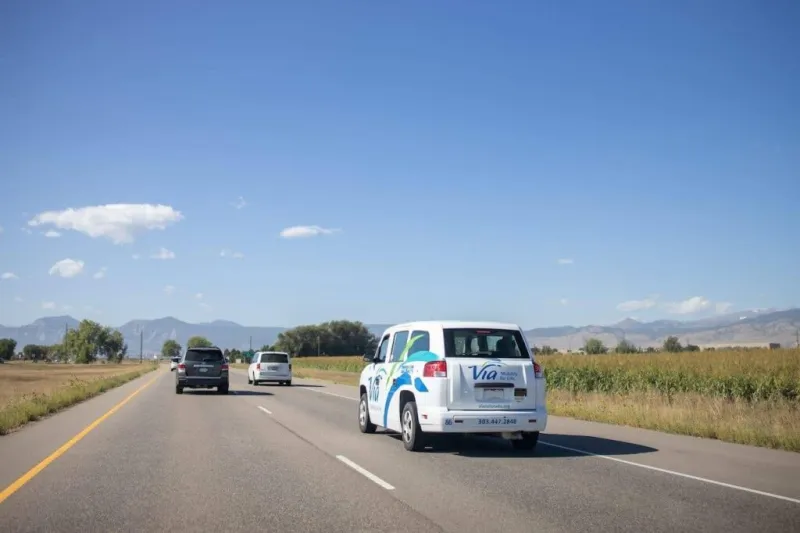
Photo: rural two-lane highway small town America volunteer driver van, via learn.sharedusemobilitycenter.org
The building was perfect. A ramp at the entrance, wide doorways, an elevator to the second-floor clinic. The problem was the forty miles of two-lane highway between the patient and the parking lot.
That paradox — physically open doors made unreachable by distance — defines a quiet crisis across rural America. Federal data from the National Transit Database shows that roughly 45 percent of Americans have no access to public transportation, and the shortfall is concentrated overwhelmingly outside metropolitan areas. In many counties, the last intercity bus stopped running decades ago. The door is open. The road to it is not.
When the Bus Leaves and Doesn't Come Back
Rural transit was never robust, but it existed. Greyhound's network once stitched small towns together; private carriers served mill towns and farming communities until deregulation in the 1980s made unprofitable routes easy to abandon. What replaced them varied by state. Some counties built regional transit authorities. Many did not, leaving residents dependent on family, neighbors, or luck.
The consequences show up in statistics that rarely make headlines. Rural residents miss significantly more medical appointments than their urban counterparts, and transportation barriers are consistently cited among the leading causes. Job seekers without cars — often younger workers, seniors, or people with disabilities — face a labor market effectively limited to walking distance.
Consider three communities that illustrate the range of what happens next.
In a county in the Missouri Ozarks, the senior center runs what locals call "the circle route" — a single van, funded by a patchwork of federal aging-services dollars and a church raffle, that loops through four towns twice a week. On van days, the dialysis appointments happen. On off days, they don't.
In eastern North Carolina, a hospital system realized its no-show rates clustered geographically and partnered with a nonprofit to dispatch volunteer drivers. The program's waiting list, administrators admit, is itself evidence of unmet need.
And in a wheat-growing county in the Palouse region of Washington, there is no formal service at all. Instead, there is a list — kept at the grange hall and the library — of neighbors willing to drive. It works, imperfectly, because people know each other.
The Volunteer Equation
It is tempting to treat these arrangements as heartwarming anomalies. They are better understood as infrastructure operating without public support.
Volunteer ride programs face the same constraints as any transit system: driver recruitment, insurance, vehicle maintenance, scheduling. The difference is that they absorb these costs through goodwill rather than tax base. A retired schoolteacher who drives a cancer patient to Spokane every other Tuesday is, functionally, a transit employee who is not on any payroll.
This model has limits. Volunteer availability tracks with the same demographic pressures — aging populations, out-migration of working-age residents — that create the need in the first place. Rural transit advocates note that demand-response services, where riders book trips in advance, offer a more durable middle path, but they require stable funding that many county budgets cannot absorb.
What Federal Data Suggests Comes Next
The federal government has begun treating rural mobility as a connectivity issue on par with broadband. The Federal Transit Administration's Rural Transit Assistance Program and various mobility grants channel modest sums to state agencies, which in turn fund county-level demand-response services. Advocates describe the funding as essential but fragmented — a dozen programs with separate applications serving overlapping needs.
The more interesting developments are local. Some counties have consolidated human-services transportation into a single dispatch line, so a resident calling about a Medicaid trip and one calling about a grocery run reach the same scheduler. Others have negotiated with school districts to use buses between morning and afternoon routes — vehicles that already exist, running roads that are already paved.
The Open Door Is Only Half the Solution
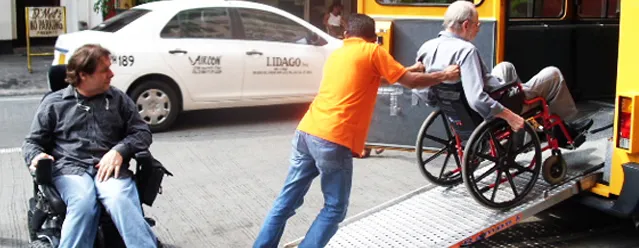
For organizations working on access and inclusion, the lesson is uncomfortable but clarifying: accessibility is a systems problem, not a facilities problem. A town can retrofit every entrance and still exclude the resident who cannot arrive.
The practical starting points are unglamorous. Map where your clients, members, or patients actually live — not where your service area says they live. Ask them, plainly, how they got to you last time. If the answer involves a neighbor's pickup truck, your community has a transit gap, and someone in it is already filling the role of a transit agency without the title or the funding.
Rural America has never been short on neighbors willing to drive. What it needs is the institutional recognition that those neighbors are doing public work — and a plan that doesn't leave the road between here and there to chance.