Thirty-Five Years After the ADA, the Ramp Is the Easy Part
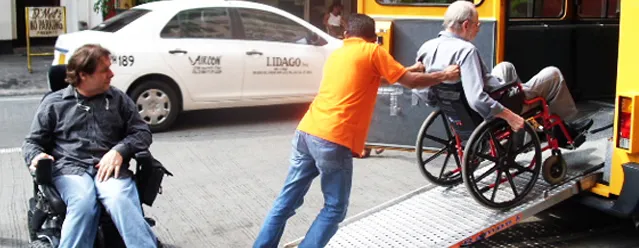
Photo: Wheelmobile, CC BY-SA 3.0, via Wikimedia Commons
This summer marks thirty-five years since the Americans with Disabilities Act was signed into law. An entire generation of disabled Americans has now grown up under its protections — attending school, entering the workforce, and patronizing businesses that were legally required to accommodate them. And yet, ask any wheelchair user, blind patron, or Deaf customer where they can reliably shop, dine, or do business, and you will hear a patchwork answer that varies block by block.
The law, in other words, changed the paperwork. It has not fully changed the doors.
Compliance Is a Floor, Not a Welcome
"I can point you to a dozen cafés with a perfectly code-compliant ramp out front," says Marisol Vega, a disability rights organizer in Columbus, Ohio, "and I can tell you the restroom stall is used for storage, the menu is a PDF my screen reader can't open, and the staff talks to my companion instead of me."
Vega's experience reflects a distinction advocates draw constantly: the difference between being technically accessible and being genuinely welcoming. The former is a matter of measurements — a 32-inch doorway, a grab bar at the right height. The latter is a matter of posture, and it cannot be inspected by any building official.
Small businesses often assume accessibility is expensive. Advocates counter that the expensive part is usually the retrofit; the welcoming part costs little more than attention. A store owner who greets a blind customer by name, offers a large-print menu, or simply asks "what would work best for you?" has done more for access than a thousand dollars of hardware.
Where Main Street Falls Short — and Where It Leads
The record is genuinely mixed. National surveys consistently find that a majority of small businesses remain out of full compliance, most commonly on entrance thresholds, restrooms, and point-of-sale counters. Digital accessibility lags even further: websites that are invisible to screen readers, checkout pages that fail keyboard navigation, and appointment systems that offer no phone alternative.
But the picture is not uniformly bleak. In towns from Burlington, Vermont, to Santa Fe, New Mexico, merchant associations have begun treating accessibility as a shared civic project rather than an individual liability. Group purchasing for portable ramps, shared grants for door automation, and peer audits — where one shopkeeper reviews another's entrance — have proven cheaper and faster than going it alone.
"When three shops on a block split the cost of an automatic door, nobody is burdened and everybody's customer base grows," notes David Okafor, who runs a hardware store in Lansing, Michigan. "Disabled folks don't shop alone. They bring families. They come back."
A Checklist for This Week
For business owners wondering where to begin, advocates suggest starting small and starting now:
- Walk your own entrance. Push a stroller or roll a suitcase through it. Note every lip, weight, and awkward turn.
- Test your website with your eyes closed. Try navigating by keyboard alone, or use a free screen reader. If you cannot reach checkout, neither can a blind customer.
- Clear the path, literally. Aisles blocked by seasonal displays are the single most common and cheapest fix.
- Train staff on etiquette. Speak directly to the disabled customer, not their companion. Offer help; don't impose it.
- Post your accessibility facts online. List entrance details, restroom status, and service animal policy. Uncertainty keeps customers away more than inaccessibility does.
- Ask before you assume. A five-minute conversation with disabled patrons in your own neighborhood will surface problems no consultant would find.
The Open Door, Thirty-Five Years On
The ADA's promise was never merely about ramps and signage. It was about participation — the assurance that a disabled American could walk into any store, office, or civic hall and be treated as a full member of the public. Thirty-five years in, the hardware has largely caught up where the law has forced it. The welcome still has to be built by hand.
The good news, advocates insist, is that building it is within reach of any owner, on any street, starting this week.