Stop Guessing, Start Asking: Why Good Intentions Build the Wrong Things
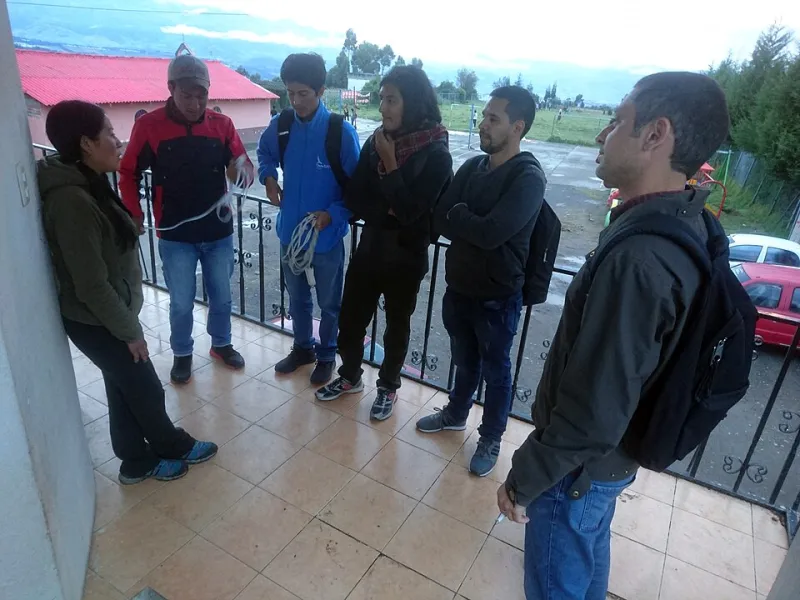
Photo: Jorge Auz Salazar, CC BY-SA 4.0, via Wikimedia Commons
Here is an uncomfortable pattern that repeats in towns across America: a group of committed volunteers identifies a problem, works weekends for a year, cuts a ribbon — and six months later, the building sits mostly unused. The food pantry stocked with the wrong staples. The job fair nobody attended. The community garden that became, as one weary organizer put it, "a very expensive way to grow zucchini nobody wanted."
These failures rarely stem from laziness. They stem from a substitution: groups answer the question they know how to answer instead of the question their neighbors are actually living with. If community work has a first principle, it is this — you do not get to decide what people need. You only get to decide how well you listen.
The Guessing Problem
The dynamic is easy to recognize once you've seen it. An organization forms around a need observed from the outside: visible poverty, an empty lot, a statistic in a county health report. Programs are designed around that observation. Residents are then invited — sometimes told — to participate in the solution designed for them.
Community organizers have a name for the alternative: asset-based community development. Start by cataloging what a neighborhood already has — skills, gathering places, informal leaders — rather than cataloging its deficits. Then let residents define the gap. The distinction sounds academic, but it determines everything downstream, from which doors you open to who feels ownership once they're open.
Veteran civic volunteers describe the shift in blunt terms. "We spent two years planning a tutoring center," one coordinator in a mid-sized Ohio city told me. "Our first listening session revealed that parents' actual barrier was transportation — kids couldn't stay after school because there was no late bus. We ended up organizing a carpool network instead. It cost almost nothing. It worked."
A Practical Method for Asking Well
Listening is a skill with techniques. Groups that do it effectively tend to follow a recognizable sequence.
Go where people already are. Listening sessions held in city hall at 2 p.m. on a Tuesday will collect the opinions of people free at 2 p.m. on a Tuesday. Hold sessions at churches after services, at laundromats, at school pickup lines, at the senior center's coffee hour. Bring translation. Bring childcare. Bring food.
Ask open questions and stop talking. Not "Would you use a community center?" but "What's something this neighborhood used to have that you miss?" and "What's the hardest part of an ordinary week here?" Then wait. Silence does more work than follow-up questions.
Count what you hear. Anecdotes move hearts; patterns move budgets. Track themes across dozens of conversations. If fourteen separate households mention the same barrier, that is not a coincidence — it is a mandate.
Report back before you build. This is the step most groups skip, and it's the one that builds trust. Summarize what you heard, share it publicly, and say plainly which suggestions you're pursuing and which you can't, and why. Residents who see their words reflected back are residents who show up later.
Pilot small, adjust fast. A six-week trial with honest evaluation beats a grand launch with a decade of sunk costs. Build the review into the plan from day one.
Return the results. After the program runs, go back to the same people. Did it help? What would they change? This closes the loop and converts participants into partners.
The Harder Part: Changing Your Own Mind
The techniques are the easy half. The harder half is organizational humility — being willing to discover that the program you're attached to isn't the program that's needed. Some groups resolve this by putting residents on the steering committee with real voting power, not advisory roles. Others adopt a simple rule: no new initiative launches until at least fifty one-on-one conversations have shaped it.
None of this guarantees success. But it changes the odds, and it changes the experience. Volunteers who ask first report something they didn't expect: the work gets easier and the relationships get deeper, because they're no longer performing service at their neighbors but building something alongside them.
Doors Open From Both Sides
The metaphor this publication lives by holds here, too. An open door implies someone waiting on the other side, ready to walk through. The only way to know what they're walking toward is to ask them — before the paint dries, before the grant is spent, before the plan is final.
Ask better questions. Then have the discipline to let the answers change what you build.