Asking for the Password: Inside the Quiet Network That Carries America's Opportunities
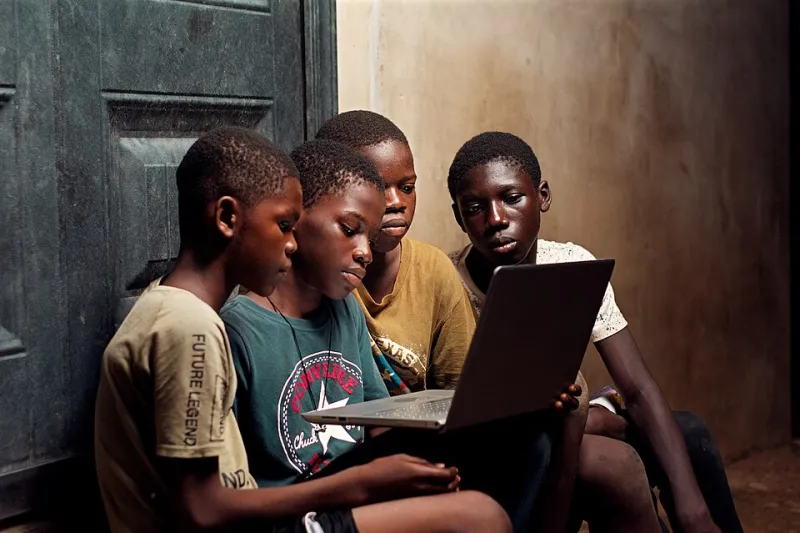
Photo: Kwameghana(Bright Kwame Ayisi), CC0, via Wikimedia Commons
In Cherokee County, Kansas, the strongest internet connection for miles in some directions is not at the high school or the county courthouse. It is in the laundromat on the edge of town, where a hand-lettered sign above the folding tables lists the network name and password in blue marker. On any given weekday, someone is filling out a job application on a phone, a parent is attending a telehealth appointment in a parked car within range of the router, and a teenager is submitting homework that cannot be uploaded from home.
That password is doing more work than most infrastructure projects that cost a thousand times more. It is, in a very literal sense, the front door to employment, education, and government services for people who would otherwise be standing outside them.
When the Application Only Exists Online
The numbers make the stakes plain. Roughly one in five rural households lacks broadband at home, according to Federal Communications Commission data, and even where service nominally exists, affordability and reliability keep many families offline. Meanwhile, the doors that matter have quietly moved to the other side of a login screen. The majority of American employers now require online applications. Social Security, Medicaid renewals, unemployment claims, federal student aid — all of it assumes a connection.
For households without one, the practical result is a daily pilgrimage. People sit in library parking lots after hours to borrow the signal. They time errands around café hours. They ask a store clerk for the password the way earlier generations asked to use the phone.
"People assume the digital divide means not owning a computer," says a library director in eastern Oklahoma. "Most of our patrons have a phone. What they don't have is a place where that phone works well enough, long enough, to finish something important. A hotspot in a parking lot gets you a text. It does not get you through a benefits application that times out."
The Library as Default On-Ramp
Public libraries remain the backbone of this informal network. Nearly every branch in the country offers free Wi-Fi, and many extend the signal into the parking lot around the clock — a policy choice that costs nothing and, in effect, turns hundreds of thousands of square feet of asphalt into an after-hours access point.
But libraries carry more than bandwidth. They carry the human layer. A growing number of systems employ or train "digital navigators" — staff and volunteers who sit with patrons and walk them through the maze of portals, password resets, and scanned documents that modern life demands.
A retired schoolteacher who volunteers as a navigator in a western Kansas branch describes her week: a man applying for his commercial driver's license renewal, a grandmother setting up email to receive hospital test results, a young couple assembling documents for a home loan. "Nobody comes in asking for the internet," she says. "They come in asking for the thing the internet is standing in front of."
Where the Signal Ends
The failure mode is just as instructive. In broadband dead zones — pockets of the Dakotas, the Appalachian hollows, stretches of the desert Southwest — there is no password to ask for. Residents drive thirty, forty, sometimes sixty minutes to reach a reliable connection. County officials in several states have begun mapping these gaps the way earlier generations mapped roads without bridges, treating a dead signal as a transportation problem in disguise.
The consequences compound. Students fall behind on assignments that assume home internet. Small businesses cannot process card payments or update their online listings. Farmers unable to reach commodity markets and weather data over a reliable connection lose margin in a business that runs on thin margins already.
Towns That Made Bandwidth a Welcome Mat
The encouraging news is that a number of communities have stopped treating public connectivity as an accident and started treating it as civic infrastructure.
- Chattanooga, Tennessee built one of the nation's fastest municipal fiber networks and has used it to anchor downtown revitalization and remote-work recruitment.
- Wilson, North Carolina extended city-owned broadband to residents at rates private providers had declined to match, becoming a model cited by towns across the South.
- Smaller towns in Nebraska and Minnesota have installed downtown Wi-Fi districts, blanketing main street so that a job seeker with a phone can sit on a public bench and complete an application.
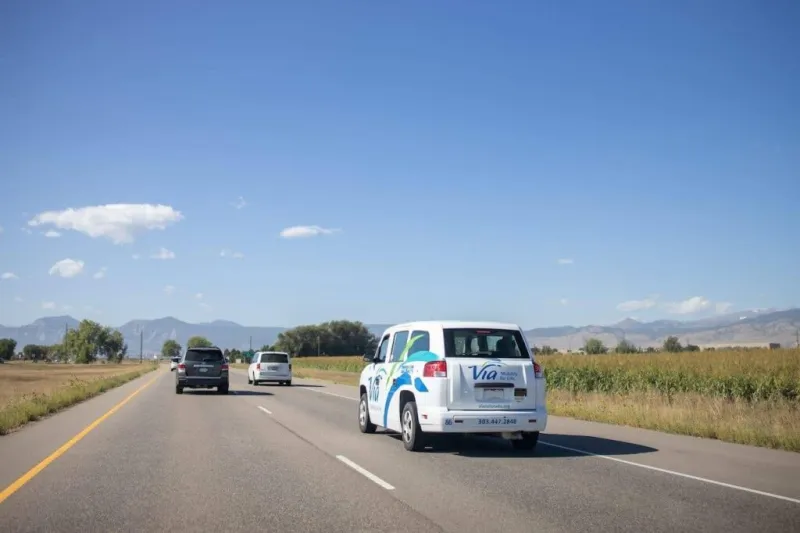
- Rural school districts in several states park Wi-Fi-equipped buses in church and community-center lots in the evenings, a fleet repurposed from transportation to access.
The common thread is intent. In each case, local leaders decided that a connection was not a luxury purchase for those who could afford it, but a doorway the whole community was entitled to walk through.
What a Password Costs, What It Returns
The economics are hard to argue with. An upgraded router and an extended signal in a laundromat or diner costs a few hundred dollars. A municipal Wi-Fi district runs into the low tens of thousands. Compare that with the cost of a single family stuck in unemployment because an application could not be submitted, or a student repeating a grade, or a main street business lost to a market it could not reach online.
There is also a softer return, one that fits the older American tradition of the public square. A library parking lot with a strong signal at midnight is a statement about who a town is for. A café that prints the password on the menu board without being asked is participating in the same tradition as the general store that once let farmers use its telephone.
The Front Door Worth Funding
Federal broadband money is finally flowing, and the large fiber builds it funds matter. But the last mile of that build — the human one — will still run through the library branch, the laundromat sign, the navigator volunteer who knows which portal is down this week and which form to bring printed.
Communities that want to be serious about opportunity might start with an inventory. Where can a resident get online right now? Until what hour? Is the signal strong enough to finish something, not just start it? Who in town can help when the technology fails?
The answers to those questions describe a second map of America — one drawn not in roads and rivers, but in signals and passwords. Towns that improve that map will find that welcoming people online is no different from welcoming them through any other door. It begins with deciding the door should be open, and then, quite simply, opening it.